
Artist Journal

The Raven Knew
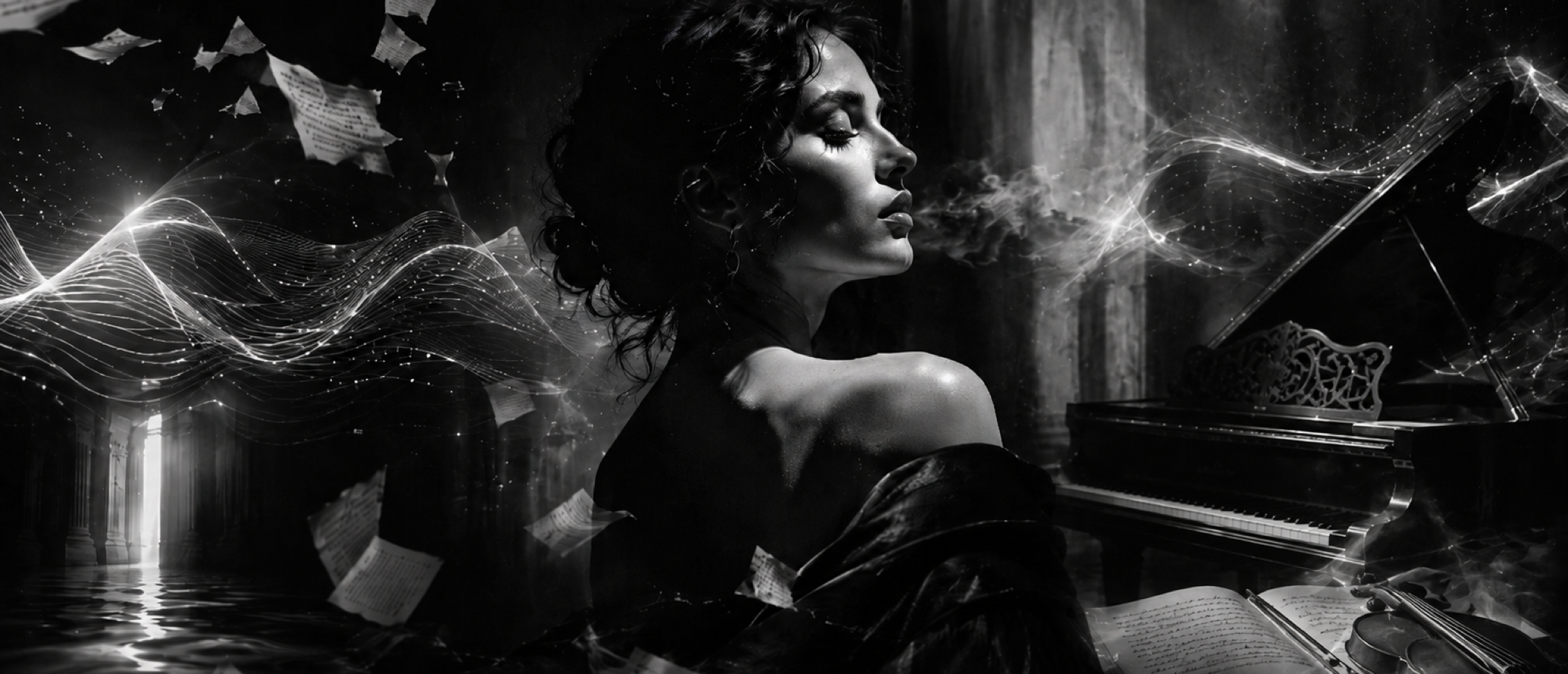
A poetic reflection on The Raven Knew, where Ashmere Castle remembers, longing outlives its moment, and Emma Vale must decide what the past is allowed to become.

The Shadows Are Birds
The Shadows Are Birds The fates opened our hearts and stained us with fire; when finally they pulled us apart, the ashes of poetry remained. I have often wondered what becomes of love when it leaves us. Not the person. Not the story. But the feeling itself. Where does it go? I think all love leaves something behind. Not always joy. Not always grief. Sometimes only the strange golden residue of having been changed by another human being. A subtle rearrangement of the soul. A room within us that did not exist before. This is why I wrote Stranded Hearts. Because some loves become memories. Some become scars. And some become poetry. The shadows are birds, and the birds are souls. I have always believed that poetry changes us in ways we rarely notice at first. A poem enters through language but leaves behind something larger than words. For a brief moment, something within us shifts. A door opens. A memory awakens. A truth we could not name suddenly recognizes itself. Years later we may forget the poem entirely. We may lose the title, the author, even the lines that once moved us. Yet the transformation remains. The poem has become part of us. Beneath the surface, beyond memory, it continues its quiet work. Is this why art matters? Not because we remember it. But because it changes us. I have seen them before. In dreams. Beyond ruined gates where ivy swallowed stone. Perhaps memory is stranger than we imagine. Sometimes, just before sleep, it feels as though another world opens. A city of towers at dusk. Ancient books resting beneath dust and candlelight. The scent of rain moving through forests older than language. A blood-red rose pressed between forgotten pages. And somewhere within that landscape gather all the loves we once carried. Not lost. Only transformed. In Stranded Hearts, love is not polite, orderly, or obedient. It is fire. It is hunger. It is the raven watching from the edge of the garden. It is the rose opening in darkness. It is every beautiful thing that risks breaking our hearts simply because it exists. We are not here to preserve ourselves. We are here to burn. To love. To create. And maybe that is what all art asks of us. To survive the burning. To gather what remains. To transform sorrow into beauty. To discover that nothing is ever truly lost. Not love. Not memory. Not the soul. The shadows are birds. The birds are souls. And every poem is evidence that something beautiful once flew through us. Stranded Hearts: A Dark Romantic Anthology of Love Poetry by Gesso Cocteau © 2026

Endless Celebration: Gesso Cocteau's 51-Foot Bronze in Bellevue
If you've walked past the corner of Northeast Eighth Street and Bellevue Way in Bellevue, Washington, you've likely stopped in your tracks. Endless Celebration, a soaring 51-foot cast bronze sculpture weighing nearly three tons, commands the plaza in front of Bellevue Place with a quiet, breathtaking audacity. A Commission Born from Community When Kemper Freeman Jr. commissioned California-based sculptor Gesso Cocteau to create a landmark work for Bellevue Place, the brief was as open as the sky the sculpture reaches toward. Cocteau's response was characteristically bold: two dancers, one figure lifting the other skyward, defying gravity with trust and joy. "I wanted to create a subject of dialogue dedicated to bringing the community into the art," Cocteau explained in a 2005 interview. "Without human interaction, sculpture would be void, it would be empty of emotion." Playing with Balance and Gravity Balance is a recurring obsession in Cocteau's practice, not just physical balance, but the emotional equilibrium between hard work and a good life. Endless Celebration embodies this philosophy literally: one figure dares to hold the other aloft, declaring its space in the sky with trust. The name itself draws from poetry. It evokes celebration, romanticism, and joy, the spirit of a community where people can work hard and enjoy the good life. The Challenge of Scale Creating a 51-foot public sculpture presents unique engineering and artistic challenges. Without the ability to stand the piece upright during fabrication, Cocteau had to envision the final work entirely in her mind, and ensure the large-scale execution remained faithful to the approved maquette. The sculpture had to read beautifully from many angles and distances, from a passing car to a pedestrian standing at its base. Monumental Sculpture as Private Conversation For Cocteau, public sculpture is never purely public. "Monumental sculpture should represent emotions beyond words," she says. "It should engage the viewer in a private conversation, each individual finding their own interpretation." Endless Celebration has done exactly that for Bellevue since its installation. It is a landmark, yes, but more than that, it is an invitation. Article from The Bellevue Reporter "Endless Celebration, a 51-foot cast bronze sculpture by Gesso Cocteau, photographed at dusk at Bellevue Place, Washington" Explore the sculpture in tabletop and midsize bronze editions at gessococteau.com #gessococteaubronze #gessococteausculpture

Aspasia
What I Once Believed Three Movements I. What I Believed I thought the gods were generous, that Demeter's grief was temporary, that the seeds held more than they spent, that even the underworld gave back what it took. I believed love was a country you could learn the language of, that the body was a door and not a burning house, that hunger, if you fed it honestly, would one day fold its hands. I was that girl standing at the river's edge naming the water as if names were enough. The light on the surface so bright I mistook it for depth. II. What Life Revealed The fracture was not sudden. It came the way rivers carve stone, slowly, with great patience, until one morning you look down and see the canyon you are standing in. I learned that Orpheus turned around not from weakness, but from love that couldn't believe in what it couldn't see. I have turned around. I have lost what I turned to look at. I have kept walking anyway. I named each one carefully, the way you name a river before you cross it. The naming changed nothing. I crossed anyway. Time is not a healer. Time is just the light that keeps changing on the same still water. III. What Remains What remains is this body, still capable of heat, still moving toward light the way water moves, not because it chooses but because it is water. I have become Aspasia, not the woman who was forgotten but the dragon she becomes in the long telling: clawed, necessary, curled around the one bright thing she will not relinquish. I know now that shadow and light are not opposites. They are the same hand writing the same word in two different inks. What I believe now is smaller and more durable, the way bronze outlasts the sculptor, the way a raven knows without being told that the carcass is also a feast. I am still here. Still sensual, still seeking, still that girl at the river, only now I know the light on the surface is also beautiful even if it is only surface. Even the surface holds the sky. Dragon Sculpture and Poem © Gesso Cocteau

Love's Divine
Love’s Divine There are moments when the body forgets its boundaries. I have seen it. I have felt it. And I have tried, with bronze, to hold that fleeting truth. In Love’s Divine, I was not sculpting an embrace. I was searching for the moment just before it, the instant where two beings are no longer entirely separate, yet not fully joined. That threshold has always fascinated me. It is where love lives most vividly. Not in completion, but in the becoming. I elongated their forms deliberately. I wanted the figures to resist weight, to rise out of it, as though gravity itself had loosened its claim. When we fall into love, we are not heavy, we are lifted. Our bodies remember something lighter, something unbound. I wanted the bronze to remember that too. They do not stand firmly on the earth. They balance on intention. On desire. On the invisible force that draws one soul toward another. The base holds them, yes, but only just. Everything above it is reaching. And that reaching is everything. I have always believed that love is not a static thing. It is movement. It is a current. When I shaped their bodies into arcs, I was following that current, letting it guide the line, the tension, the space between them. That space is not empty. It is alive. It is where the energy gathers, where emotion becomes almost visible. That is the true subject of the piece. Not the figures themselves, but what exists between them. There is a music there. I felt it as I worked, something distant, almost remembered, like a melody carried in their bodies. They move toward each other as if they are listening to it, as if they have no choice but to follow it. Not hurried. Not hesitant. Certain. Above them, I imagined a sky breaking open. Not with destruction, but with illumination. Lightning as revelation. The kind of knowing that arrives without language, without permission, and changes everything. They form an arch, yes, but not one I constructed. It revealed itself. A bridge between two beings, each shaping themselves in response to the other. Not symmetry. Harmony. In my work, I often think about how bronze remembers fire. It is never entirely still. It holds within it the memory of transformation. In Love’s Divine, I wanted that memory to remain active, so that the figures feel as though they could still move, still soften, still become. Because love is never finished. It does not live in possession. It does not live in arrival.It lives in the reaching. As a sculptor, I do not believe I create that space.I enter it. And if I am fortunate, if I am listening closely enough, I can bring something back from it. Something that allows another to stand before the work and remember. Not the idea of love.But the feeling of it. The moment where time dissolves, where the world falls away, and there is only that luminous pull toward another being. Where we do not lose ourselves. We rise beyond ourselves. And for an instant, we knowwe were never truly separate. Essay and Sculpture © Gesso Cocteau

Golden Butterflies
The Golden Butterflies It starts before you touch the door, a gilded frequency, like a secret with teeth. You enter, and the yellow butterflies enter with you, a thousand mouths of wanting, not beauty, not omen, but appetite. They don’t bite. They do worse. They cover. They turn the air into weight, a living curtain closing around the bed, brushing my skin with the heat of a fever that you call devotion. But a fire this hot changes the physics of a room. The closer you press with the gravity of your earth, the more I draw my light into the trees and make a wilderness of myself. You call it longing. I recognize possession, gold held too tightly until it bruises. So, I answer you with the silence of the sky, and with distance that does not explain itself. In the center of the shining swarm, I become the heart that will not melt. I wrap myself in cool black linen, and where you try to hold me, the sheer heat of your desire splits my wings. And I slip into a dream you cannot follow. Weighted by the fury of the storm, I turn away, choosing the shadow, where the raven lives within me, and my mercy goes feral, holy, and out of reach. Poetry and Image © Gesso Cocteau #gessococteaupoetry

The Beautiful Bats
The "Frosty" Traveler of Indian Wells: A Seasonal Mystery Solved For three years now, I’ve watched these elegant, large-winged shadows glide quietly through our Coachella Valley skies each spring. They arrive like clockwork in April, as if summoned by something ancient and precise, and by mid-May they are gone again, vanishing as mysteriously as they came. At last, I know who they are. They are the Hoary Bat (Lasiurus cinereus). A Shimmering Presence These are not the small, fluttering bats most people imagine. The Hoary Bat is something altogether different, one of North America’s largest, with a wingspan that can reach up to sixteen inches. When the light catches them just right, they seem almost dusted in frost. Their fur carries a deep mahogany tone softened by grey, each hair tipped in white, giving them that luminous, “hoary” glow. And if you look closely, there are small white splashes at the wrists of their wings, like quiet signatures written in light. The Long-Distance Commuter What amazes me most is their journey. These are not creatures that stay close to home. They travel, truly travel. Winters are spent in the warmth of Mexico, and summers stretch as far north as Canada. They do not gather in colonies or caves; instead, they live solitary lives, resting in trees, moving with a kind of quiet independence I find deeply beautiful. When they pass through Indian Wells, it feels less like an accident and more like a chosen pause along an ancient route. A Five-Star Garden Menu Our neighborhood becomes, for a brief moment, their sanctuary, a kind of luxury rest stop in the desert. They tuck themselves into our palm trees during the day, wrapping their wings around their bodies like soft, living cloaks. And at dusk, they rise. They are hunters of a very particular kind, drawn to the large moths of the Coachella Valley. Palm Flower Moths and the White-lined Sphinx, those fast, hummingbird-like creatures, become their nourishment. It’s fascinating to watch; they catch their prey mid-flight with precision, consuming only what they need, and letting the delicate wings fall gently to the ground like fragments of paper drifting down. There is something almost poetic in that restraint. I feel incredibly lucky that these remarkable travelers choose our garden, our palms, our small corner of the desert, as part of their long journey each year. For a few weeks, we share space with them, quietly, respectfully, before they lift again into the night and continue on their way. And somehow, each time they leave, they take a little bit of wonder with them, leaving the rest behind for us to hold onto until they return again. Image and Poem © Gesso Cocteau

She Does Not Turn Around
Before She Turns She does not turn, not yet as if the body knows to look is to surrender. And love if that is what this is refuses the dignity of a name. It does not arrive. It infiltrates. Like music through a wall too thin to protect you, it enters the spine first, not as touch, but as recognition. You thought it would be light. You thought it would openlike mercy,forgiving,something you believedyou could survive. But no. It is closer to smoke, something already burning without permission. A hunger that knows exactly… But a hunger that knows where to place itself to undo you. The air alters. Still no touch. Only that unbearable proximity, so precise it begins to map you from the outside in, a line drawn without mercy, without contact, without asking. You could turn. You don’t. Because restraint is the last illusion of control. And something in you older than thought is already leaning toward it. You understand now: love is not gentle. It is ostinato. What it finds, it enters. What it enters, it changes. What it changes does not return. And still she does not turn. Because she knows the moment she does it will not be love that meets her, but something more ruthless, more intimate something that has been waiting not for her body, but for her consent to disappear into it. Image and Poetry © Gesso Cocteau #gessococteau

The Intelligence of Silence
The Intelligence in Silence "I stopped performing for the light and started eating the dark. It turns out, hunger isn't a weakness—it’s an initiation." I did not fall.I wanted to know.The surface world was thin polite light, curated smiles,rooms arranged for approval.I could feel something beneath itlike a pulse under marble.So I went down.Not dragged.Not tricked.Drawn.The wheat parted around my bodyas if I were returning to somethingolder than memory.Gold against my cheek.Dry stalks whisperingthis is where the roots speak.The pages pinned behind me,fragments of script, abandoned drafts,ink pressed into paper like breath into skin ,were not relics.They were versions of methat stopped halfway.I lay among themand let the ravens come.They did not circle.They landed.Black weight on my shoulder,sharp intelligence against my throat.One pressed its beakto the soft place below my collarboneand asked without sound:How far will you go?I answered by eating.The fruit was not sweetness.It was density.It was heat.It was the sudden awarenessthat hunger is not weakness,it is the mind entering the body.The red on my mouthwas knowledge passing through flesh.I wanted to know what desire iswhen it is not edited for someone else.When it is not shaped for applause.When it is not restrained into virtue.In the underworldnothing flatters you.Nothing performs for you.There, shadow does not accuse.It reveals.I met my animus there,not as a man,but as iron in my spine,as the unflinching voice that said:Take up your own depth.Do not borrow power.Generate it.I lay in sacred alonenessuntil solitude stopped feeling like exileand began to feel like initiation.The ravens did not leave.They became language.The wheat did not wither.It rooted in my body.I will carry the underworld in my mouthlike a secret lover,and nothing that touches mewill remain untouched. Poetry and Image © Gesso Cocteau