

Artist Journal
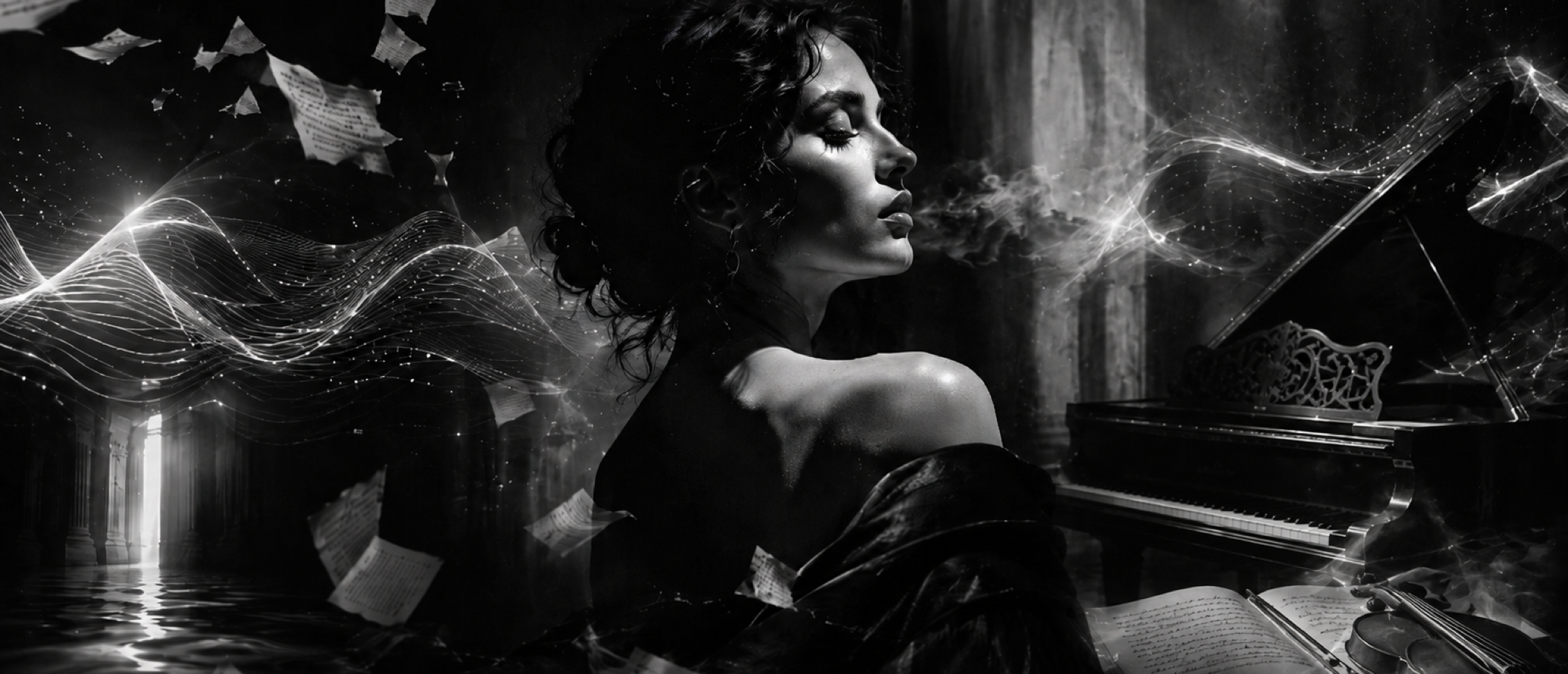

The Raven Knew
A poetic reflection on The Raven Knew, where Ashmere Castle remembers, longing outlives its moment, and Emma Vale must decide what the past is allowed to become.

The Enchanted Shoe
A cast bronze sculpture by Gesso Cocteau celebrating the timeless magic of shoes as symbols of transformation, desire, and becoming.

The Shadows Are Birds
The Shadows Are Birds The fates opened our hearts and stained us with fire; when finally they pulled us apart, the ashes of poetry remained. I have often wondered what becomes of love when it leaves us. Not the person. Not the story. But the feeling itself. Where does it go? I think all love leaves something behind. Not always joy. Not always grief. Sometimes only the strange golden residue of having been changed by another human being. A subtle rearrangement of the soul. A room within us that did not exist before. This is why I wrote Stranded Hearts. Because some loves become memories. Some become scars. And some become poetry. The shadows are birds, and the birds are souls. I have always believed that poetry changes us in ways we rarely notice at first. A poem enters through language but leaves behind something larger than words. For a brief moment, something within us shifts. A door opens. A memory awakens. A truth we could not name suddenly recognizes itself. Years later we may forget the poem entirely. We may lose the title, the author, even the lines that once moved us. Yet the transformation remains. The poem has become part of us. Beneath the surface, beyond memory, it continues its quiet work. Is this why art matters? Not because we remember it. But because it changes us. I have seen them before. In dreams. Beyond ruined gates where ivy swallowed stone. Perhaps memory is stranger than we imagine. Sometimes, just before sleep, it feels as though another world opens. A city of towers at dusk. Ancient books resting beneath dust and candlelight. The scent of rain moving through forests older than language. A blood-red rose pressed between forgotten pages. And somewhere within that landscape gather all the loves we once carried. Not lost. Only transformed. In Stranded Hearts, love is not polite, orderly, or obedient. It is fire. It is hunger. It is the raven watching from the edge of the garden. It is the rose opening in darkness. It is every beautiful thing that risks breaking our hearts simply because it exists. We are not here to preserve ourselves. We are here to burn. To love. To create. And maybe that is what all art asks of us. To survive the burning. To gather what remains. To transform sorrow into beauty. To discover that nothing is ever truly lost. Not love. Not memory. Not the soul. The shadows are birds. The birds are souls. And every poem is evidence that something beautiful once flew through us. Stranded Hearts: A Dark Romantic Anthology of Love Poetry by Gesso Cocteau © 2026

Sculpture and the Language of the Soul
Sculpture and the Language of the Soul Human beings responded to sculpture long before they understood written language. Before there were alphabets, manifestos, philosophies or cathedrals, there was the body. The curve of a spine. The lift of a chin. The protective gesture of a mother holding a child. The poised stance of a hunter. Sculpture was one of humanity’s first forms of communication because it translated emotion into physical presence. It gave shape to fear, fertility, power, grief, ecstasy and love. The earliest sculptures discovered, such as the Venus figurines carved more than thirty thousand years ago, reveal something profound about human consciousness. Even in the beginning, humanity was compelled to transform emotion and instinct into form. These primitive sculptures were not merely decorative objects. They were symbols, prayers, talismans, memory. They carried meaning beyond words. The body itself became language. Perhaps this is why sculpture continues to move us so deeply. We do not simply look at sculpture. We recognize ourselves within it. The subconscious mind responds immediately to gesture and posture. Long before we intellectually interpret a sculpture, the nervous system has already begun reading it. A bowed head suggests sorrow or contemplation. An arched back can imply ecstasy, defiance or surrender. Two forms leaning toward one another evoke intimacy even before the conscious mind identifies the emotion. Sculpture bypasses language and enters us through instinct. This silent communication is ancient. We are creatures profoundly attuned to body language. Human survival once depended upon reading physical cues quickly and accurately. The slightest movement of the shoulders, hands or eyes could reveal danger, desire, trust or betrayal. Sculpture preserves this primal vocabulary. Bronze, marble and clay become vessels for emotional memory. Alberto Giacometti once said, “The object of art is not to reproduce reality, but to create a reality of the same intensity.” This intensity is precisely what great sculpture achieves. It does not imitate life mechanically. It distills human presence into something essential. Giacometti’s elongated figures seem almost consumed by existence itself, fragile and infinite at once, like souls crossing through time. They feel less like statues and more like psychological echoes. Henry Moore understood sculpture as something deeply connected to humanity’s relationship with nature and shelter. He wrote, “Sculpture is an art of the open air. Daylight, sunlight is necessary to it.” Moore recognized that sculpture lives physically in the same world we inhabit. It shares our light, our shadows, our weather. Unlike painting, sculpture occupies space as we do. It stands beside us. It confronts us bodily. We walk around it as we walk around one another. In this way, sculpture becomes almost relational, less an image than a presence. Germaine Richier brought another dimension to sculpture, one that fascinates me deeply: the fusion of humanity and transformation. Her figures often appear suspended between the human and the mythic, between flesh and spirit, beauty and ruin. She understood that the body carries not only physical form but psychological history. When I sculpt, I think of bronze as a kind of poem written into matter. The process itself feels ancient to me. The molten metal, the fire, the transformation from clay to permanence. Sculpture is born through destruction and rebirth. Wax disappears. Fire consumes. Bronze emerges. There is something profoundly symbolic in this ritual, something almost alchemical. I often think of women weaving stories into tapestries centuries ago, encoding memory, devotion, warnings and longing into thread. Sculpture feels similar to me. Gesture becomes syntax. Form becomes emotional narrative. The tilt of a figure’s shoulders can say what language cannot. A hand extended outward can become an offering, a prayer or an act of desire. Every sculpture contains a hidden interior life. Even stillness speaks. This may be why sculpture survives civilizations. Long after languages disappear and empires collapse, the human body remains understandable. We still recognize tenderness in a mother holding a child carved thousands of years ago. We still understand anguish in the tension of a figure bent in grief. The body transcends time. And perhaps this is the deepest reason humans respond to sculpture: because sculpture reminds us that emotion itself has shape. It gives permanence to fleeting states of being. Desire becomes bronze. Love becomes marble. Sorrow becomes stone. The invisible life within us is suddenly given weight, shadow and form. Sculpture allows humanity to touch its own consciousness. Not only through intellect, but through instinct, memory and the mysterious language of the soul itself. ©Gesso Cocteau The Journey by Gesso Cocteau Limited Edition of 8

Desire
Desire Desire is not the body reaching. It is the soul rememberingwhat it once touchedbefore language divided the worldinto longing and restraint. These two figures stand facing one anotherin the stillness before surrender.They are not yet embraced.They are not yet lost.They are held in the unbearable tendernessof almost. Their hands meetwhere the visible world becomes dangerous.Not in possession.Not in demand.But in recognition. Desire begins there,in the small charged spacebetween one hand and another,where the body knowsbefore the mind dares to speak. I have always believedthe body carries truthswe spend our lives trying to translate.A tilt of the head.A shoulder turned inward.The quiet architecture of need. In Desire,the figures are both vulnerable and restrained,bowed toward one anotheras if listening to something older than touch.They do not rush.They do not perform.They stand inside the gravityof what is awakening between them. This is not lust alone,though lust is sacredwhen it is honest. This is the moment desire becomes reverence. The bronze holds the tension:the ache of wanting,the discipline of waiting,the fragile courageof allowing oneself to be seen. There is a humility in their posture,as if each figure understandsthat to desire anotheris to stand before a mysteryyou cannot own. You can only approach.You can only offer your hands.You can only become still enoughto feel what passes through you. Desire is not weakness.It is the pulse of creation itself. Every sculpture begins in desire.Every poem.Every kiss.Every prayer sent into the darkwith no guarantee of answer. To desire is to admitthat we are unfinished.That something beyond uscalls the body forward.That longing is not a flaw,but a doorway. These figures do not askto be completed by one another.They ask to be witnessed. And perhaps that is the deepest intimacy:not to consume,not to conquer,but to stand before another soulwith open handsand say without speaking, I feel the world changingbecause you are near. Desire is the space before touch becomes fate. The breath before love becomes form. The moment the body bowsto what the soul already knows. © Gesso CocteauPoetry and Sculpture by Gesso Cocteau

Golden Butterflies
The Golden Butterflies It starts before you touch the door, a gilded frequency, like a secret with teeth. You enter, and the yellow butterflies enter with you, a thousand mouths of wanting, not beauty, not omen, but appetite. They don’t bite. They do worse. They cover. They turn the air into weight, a living curtain closing around the bed, brushing my skin with the heat of a fever that you call devotion. But a fire this hot changes the physics of a room. The closer you press with the gravity of your earth, the more I draw my light into the trees and make a wilderness of myself. You call it longing. I recognize possession, gold held too tightly until it bruises. So, I answer you with the silence of the sky, and with distance that does not explain itself. In the center of the shining swarm, I become the heart that will not melt. I wrap myself in cool black linen, and where you try to hold me, the sheer heat of your desire splits my wings. And I slip into a dream you cannot follow. Weighted by the fury of the storm, I turn away, choosing the shadow, where the raven lives within me, and my mercy goes feral, holy, and out of reach. Poetry and Image © Gesso Cocteau #gessococteaupoetry

Moonlight Sonata in the Desert
Moonlight Sonata at the Desert Botanical Garden There is a quality of light in the Sonoran Desert that does not belong to anywhere else. It does not fall. It arrives. At golden hour it moves sideways, almost parallel to the earth, as though gravity has loosened its hold. It does not illuminate. It ignites. This is where bronze changes. Bronze remembers weight. It remembers the ore, the fire, the pour, the long surrender into stillness. Every sculpture begins in that resistance, in the quiet argument between motion and mass. To make a figure move in bronze is to persuade it to forget what it is. And yet, In this light, it does. When I saw Moonlight Sonata among the saguaros, something shifted. The sun did not strike the surface, it traveled it. It moved along the limbs, entered the spaces between the figures, and the sculpture opened. What was cast became breath. The dancers have always lived in that suspended reach, that moment before touch. But here, they cross into something else. Not arrival, something more fleeting. Release. The bronze remembers it was once fire. Beethoven understood this tension. In his sonata, the left hand holds, steady, inevitable, while the melody lifts free, luminous, untethered. The structure remains, but something within it escapes. This is what I ask of sculpture. The pedestal holds. The figures refuse. And the desert light becomes the only place where that refusal is complete. That this work stands in a botanical garden feels inevitable. Nothing here is obedient. The saguaro rises where it should not. Flowers bloom from thorn. Life insists in forms that defy expectation. Moonlight Sonata belongs to that language. Stillness that moves. Weight that lifts. Bronze that remembers how to become air. © Gesso Cocteau

Imagination
Imagination “If you ask me what I came to do in this world, I, an artist, will answer you: I am here to live out loud.” – Émile Zola Imagination is the light that gives passion to our lives. To imagine is to lift ourselves beyond the constraints of the mundane and into the world we dream and imagine. As children, we fly on the wings of our dreams, unburdened by the weight of reality. In childhood, imagination is the key to looking at things differently. When we are young, we have a natural love for daydreaming. Pablo Picasso wrote, “Every child is an artist; the problem is staying an artist when you grow up.” Creativity blooms from the fertile soil of imagination, implanting originality into our actions. It’s the fresh blood flowing in our veins, invigorating every endeavor with uniqueness. Imagination pulls people out of the depths of depression and psychological distress by removing the fear factor. It changes our perspective, infusing life with hope and possibility. The freedom of expression in our dream world cultivates a positive attitude. Imagination allows us to explore and express without bounds, nurturing a sense of joy and optimism. The great artist poet William Blake wrote, “The imagination is not a state: it is the human existence itself.” When you nurture your imagination, you hold the universe in your hands. Dream and let your imagination take flight, explore realms beyond the ordinary. Remember, we are what we think about ourselves, and whatever we can imagine holds the potential to become reality one day. Imagination is brilliance playing without any rules! Be a dreamer. Let your imagination soar, chase the shadows it casts on the earth. Always remember “the most beautiful things we can experience is the mysterious.” Imagination is magic! © Gesso Cocteau

Thinking of my Husband
MY HUSBAND I live everyday with the taste of him upon my flesh. His scent and his voice whisper to me throughout the day, and when we stand together our shadow is one. I love him because he is rare, because he kisses me until the sun comes up and because he is dangerous and impossible because I never want to wake up from this dream without him. Excerpt from the poem ‘My Husband’ 2024 Gesso Cocteau©